
Turnkey Contracting vs. Skeleton-Only Construction: What Ethiopian Developers Need to Know
Evaluating financial risk, material inflation, and trade coordination when choosing between structural-only and full turnkey construction.
1. The Core Dilemma in Ethiopian Real Estate Construction
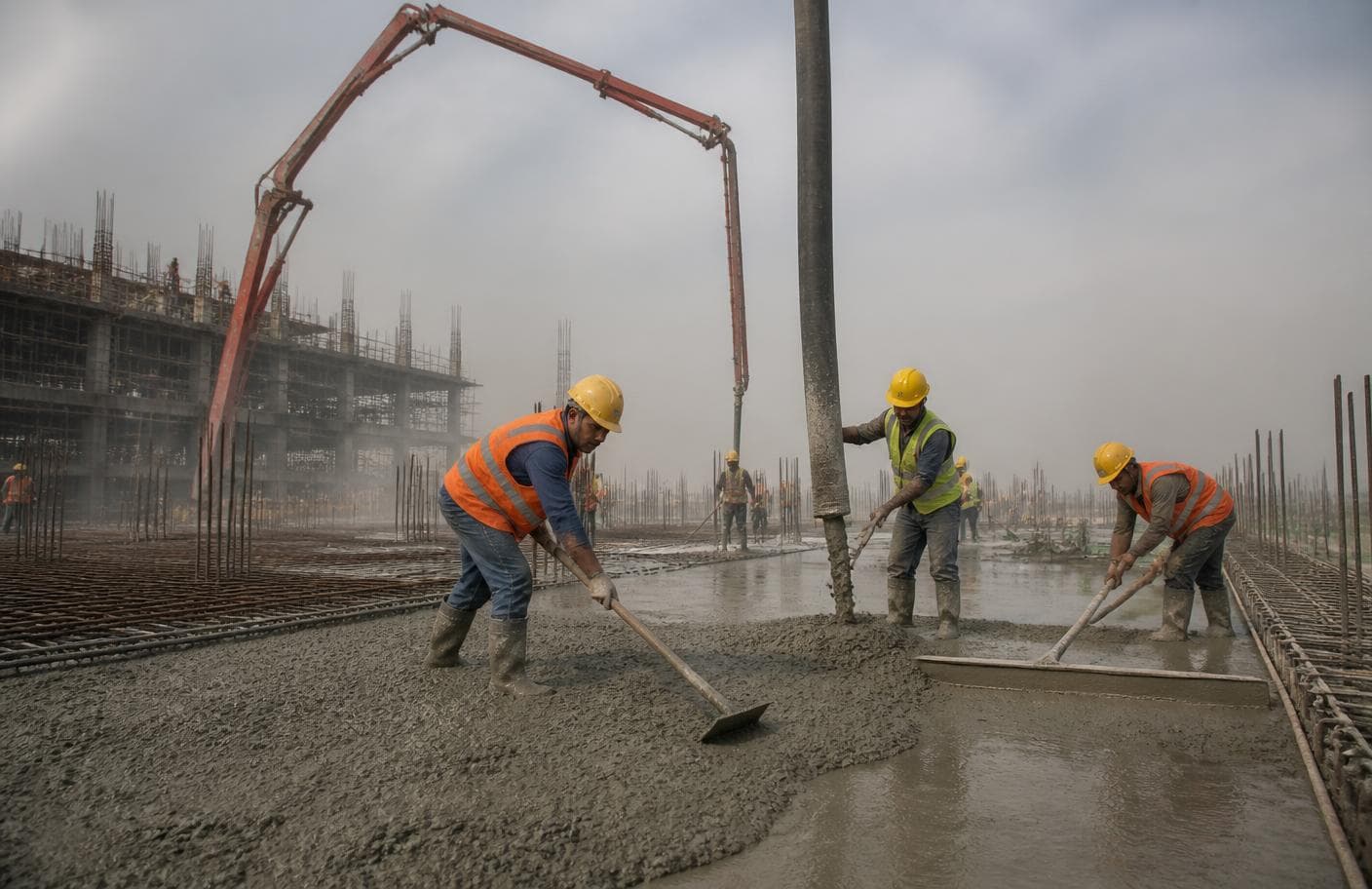
For developers and private property owners in Ethiopia, contract structuring is the single most decisive choice determining whether a building completes on schedule or joins the ranks of paused concrete shells. The prevailing market practice has long been bifurcated: developers first contract a structural civil contractor to erect the substructure, columns, and slabs, under the belief that finishing can be negotiated later at lower cost.
While this staged model appears to offer financial flexibility, it routinely results in profound coordination failure. The structural contractor rushes to complete concrete pours with little regard for finishing tolerances, leaving out-of-level slabs, crooked beam reveals, and missing MEP wall penetrations that cost millions of birr to remediate during finishing phases.
The apparent upfront savings of a skeleton-only contract are frequently erased by variation claims, trade conflicts, and rectification works during finishing.
2. The Material Volatility Factor: Cement and Rebar Hedging
The Ethiopian construction economy operates under unique supply chain dynamics. Factory allocations from domestic cement producers (Dangote, Derba, Muger, Habesha), import logistics for structural rebar, and foreign exchange adjustments create sharp price swings in core structural commodities.
In a fragmented skeleton contract, the developer bears concentrated exposure to these commodity spikes. If prices rise 30%, the contractor frequently slows down works or requests substantial variations. In a professional turnkey contract, the general contractor leverages established distributor supply relationships, structured advance procurement facilities, and early bulk purchasing to lock in material supplies before site milestones commence, insulating the developer from spot-market shocks.
3. The Hidden Cost of Contractor Interface Gaps
The most destructive friction on Ethiopian building sites occurs at the trade interface. Consider a common scenario: the aluminum window contractor measures an opening and finds the concrete lintel sagging by 25mm. Who pays to rectify it? The structural contractor has already demobilized and been paid their retention. The finishing contractor refuses to touch structural concrete without an expensive variation order.
In a turnkey agreement, this interface friction is entirely absorbed and managed internally by Yebis Engineering. Because our structural superintendents work under the same operational leadership as our architectural aluminum and finishing divisions, openings are cast true to shop drawings, floor levels are laser-verified for tile beds, and vertical shafts align perfectly from basement to roof.
4. Advance Milestone Procurement and Bulk Tier Advantages
A licensed General Contractor (GC) operates with commercial purchasing leverage that individual developers rarely match. High-spec architectural materials—such as porcelain floor tiles, sanitary fixtures, PPR piping, architectural aluminum extrusions, and gypsum board systems—are sourced at commercial trade tiers rather than retail distributor markups.
Furthermore, Yebis Engineering maintains in-house precision metalwork and aluminum fabrication facilities in Addis Ababa. This enables us to fabricate window assemblies, glass balustrades, and structural steel trusses concurrently with on-site civil works, slashing the critical path schedule by several months.
Concurrent off-site fabrication of aluminum windows and metalwork during structural concrete curing saves 8 to 12 weeks on overall project delivery.
5. When Is Skeleton-Only Contracting Justified?
Skeleton-only contracting does have legitimate applications in specific corporate circumstances. It is appropriate when a commercial developer has secured bank loan disbursement strictly tied to civil structural milestones, or when the final tenancy of the building is uncommitted (for instance, a commercial shell where future corporate tenants will fund bespoke category-B fit-outs).
However, developers electing this pathway must retain rigorous independent engineering supervision to ensure the structural contractor adheres to strict dimensional tolerances, leaves clean rebar dowels, and casts verified conduit pathways for future teams.
6. Yebis Engineering's Integrated Turnkey Governance
Yebis Engineering operates under a unified delivery framework that bridges civil construction, building services (MEP), and high-end interior architecture. Our clients receive one comprehensive contract, transparent milestone valuations, and a dedicated project superintendent who oversees the entire lifecycle from excavation to occupancy permit.
This holistic approach protects project capital, eliminates contractual finger-pointing, and delivers corporate, commercial, and residential developments built to enduring international standards.
Published as part of our commitment to transparent construction standards, rigorous multi-trade sequencing, and client protection across Ethiopia.
Have a similar project or structural challenge?
Consult directly with our engineering principals. We evaluate architectural drawings, BOQs, and site conditions within 48 operational hours.